Advanced Wound Care
Advanced treatment modalities — including skin substitute grafts, cellular tissue products, wound PRP gel, and fluorescent wound imaging — to help heal chronic non-healing wounds that have failed the standard of care.

OVERVIEW
What Is Minimally Invasive Surgery?
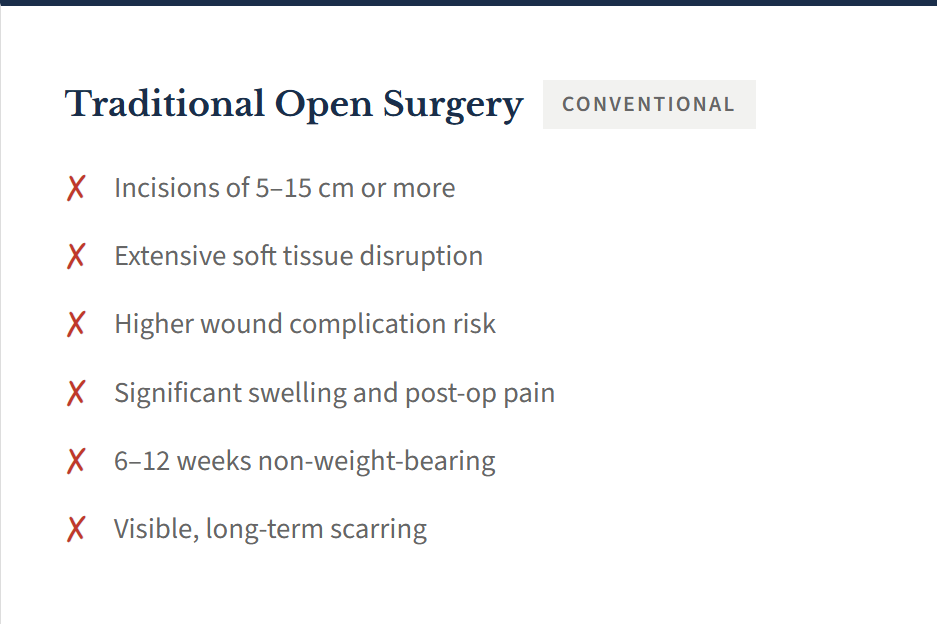
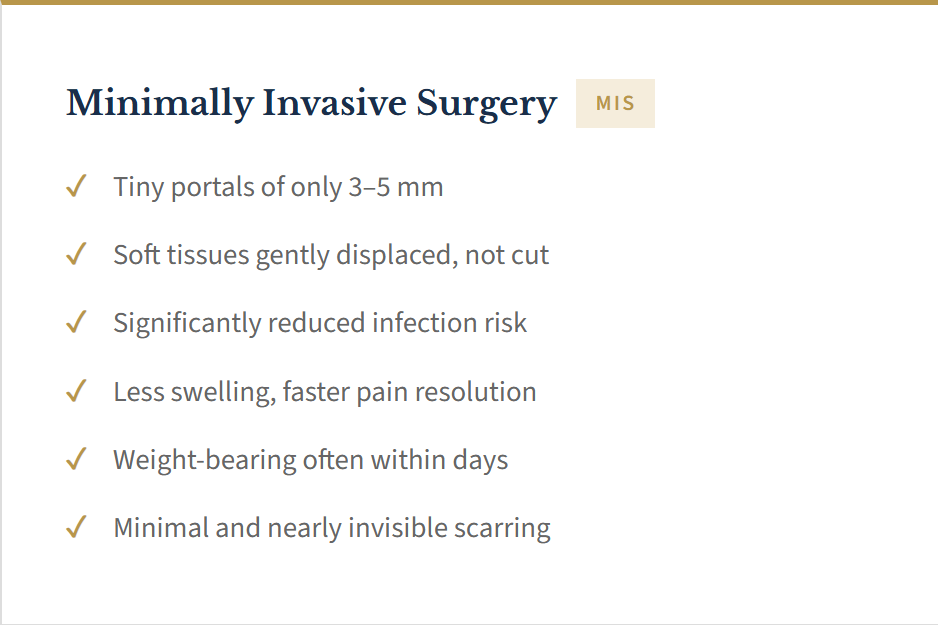
Minimally invasive foot and ankle surgery (MIS) uses very small skin openings — typically 3 to 5 millimeters — rather than the large incisions required in traditional open surgery. Using specialized low-profile instruments and real-time fluoroscopic (X-ray) guidance, Dr. Pavelescu can precisely reshape bone, correct alignment, and repair soft tissue while causing minimal disruption to surrounding structures.
The result is less post-operative swelling and pain, a significantly lower risk of wound complications, and a recovery timeline that is meaningfully shorter than conventional approaches. Dr. Pavelescu has a personal interest in minimally invasive surgery and has integrated these techniques across a broad spectrum of foot and ankle conditions — most notably his own signature bunion procedure, the Paradise-Bunion™.