Minimally Invasive Foot & Ankle Surgery
Advanced surgical techniques — including Dr. Pavelescu's signature Paradise-Bunion™ procedure — a modern surgical approach offering keyhole incisions, reduced pain, and a faster return to daily life.

OVERVIEW
What Is Minimally Invasive Surgery?
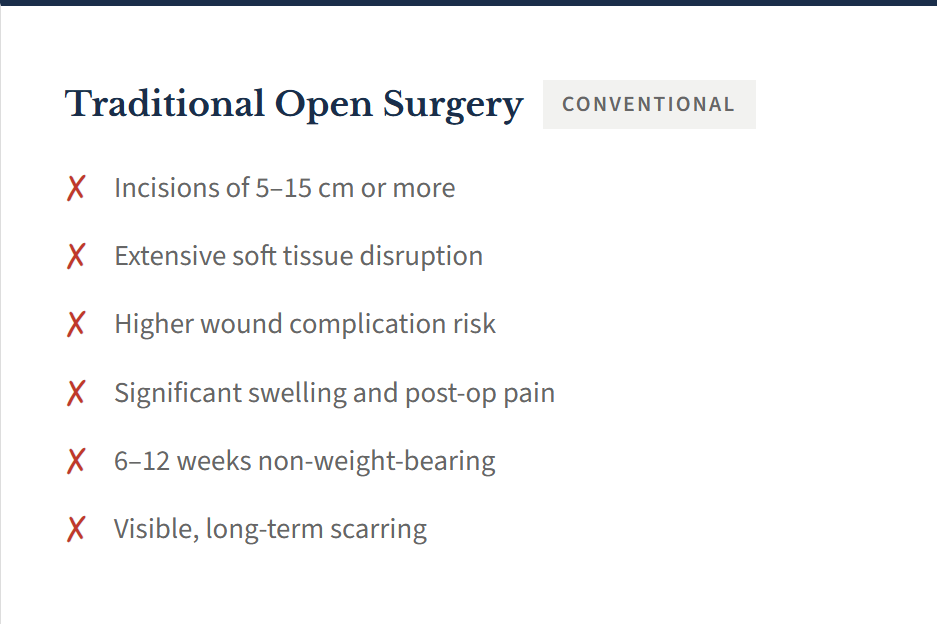
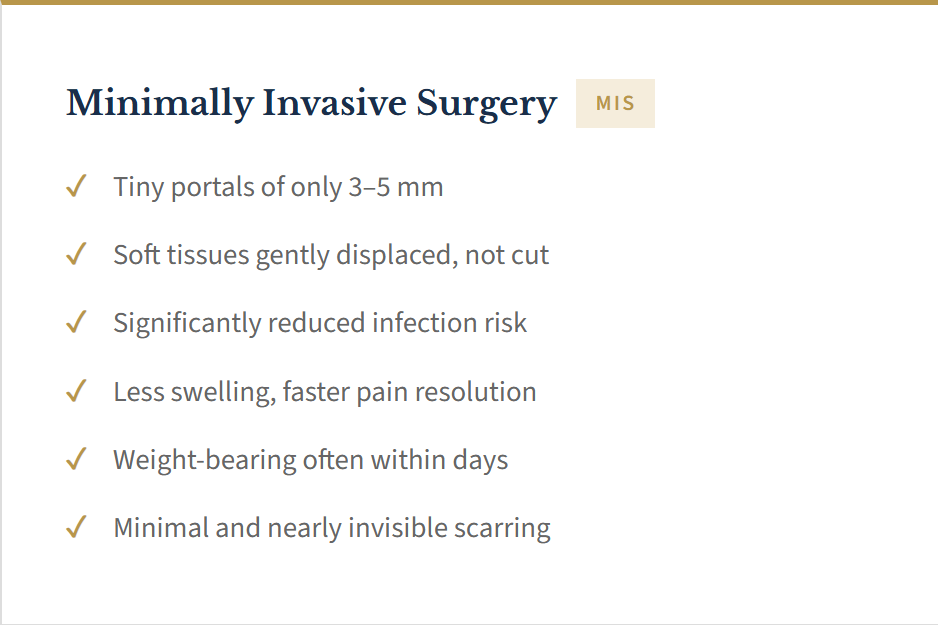
Minimally invasive foot and ankle surgery (MIS) uses very small skin openings — typically 3 to 5 millimeters — rather than the large incisions required in traditional open surgery. Using specialized low-profile instruments and real-time fluoroscopic (X-ray) guidance, Dr. Pavelescu can precisely reshape bone, correct alignment, and repair soft tissue while causing minimal disruption to surrounding structures.
The result is less post-operative swelling and pain, a significantly lower risk of wound complications, and a recovery timeline that is meaningfully shorter than conventional approaches. Dr. Pavelescu has a personal interest in minimally invasive surgery and has integrated these techniques across a broad spectrum of foot and ankle conditions — most notably his own signature bunion procedure, the Paradise-Bunion™.
TREATABLE CONDITIONS
Conditions Treated with MIS
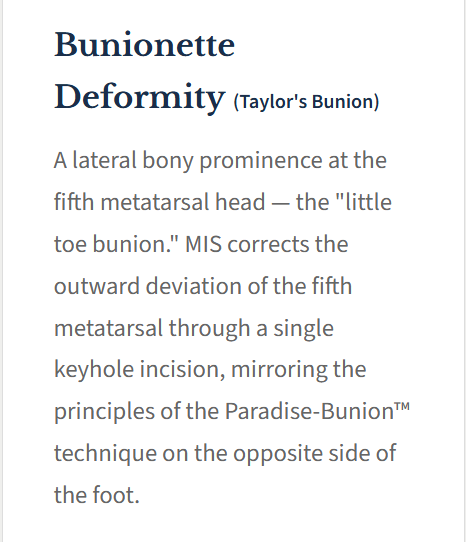
A wide range of common foot and ankle conditions can be addressed through minimally invasive techniques. Dr. Pavelescu will determine whether MIS or a traditional approach is best suited to your anatomy and goals.

SIGNATURE PROCEDURE
The Paradise-Bunion™ by Dr. Pav
Dr. Pavelescu's proprietary minimally invasive bunion correction procedure — developed and refined through years of specialized reconstructive practice.
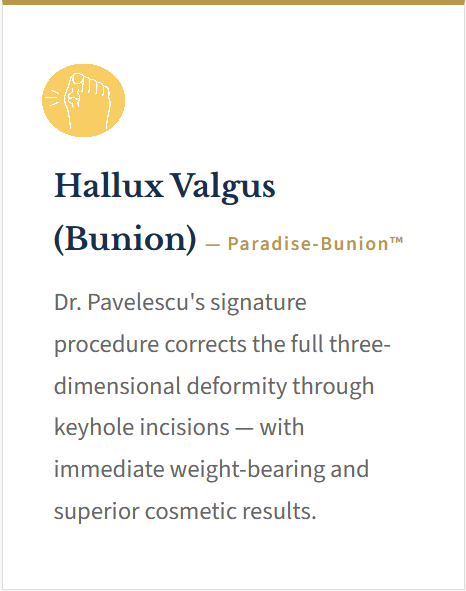
The Paradise-Bunion™ is Dr. Pavelescu's signature approach to minimally invasive bunion correction — a refined, comprehensive technique that addresses hallux valgus as the true three-dimensional deformity it is, rather than simply "shaving a bump." Named for his practice in Southwest Florida's Paradise Coast, the procedure reflects Dr. Pavelescu's commitment to precision, patient comfort, and lasting outcomes.
Drawing on advanced training in reconstructive surgery, deformity correction at the Rubin Institute for Advanced Orthopedics, and AO Foundation technique training, Dr. Pavelescu has synthesized current best-practice MIS methods into a streamlined, highly reproducible procedure designed for the full spectrum of bunion severity — from mild to severe.
Unlike conventional osteotomies that only shift bone in two dimensions, the Paradise-Bunion™ technique corrects deformity in all three planes — addressing the rotational component of the metatarsal that traditional procedures overlook. Patients walk the same day in a post-op sandal and are typically in regular shoes within 6–8 weeks.